Download Now: Intracellular Consequences of Amyloid in Alzheimer's Disease by Michael R. D'Andrea PDF
Read or Download Intracellular Consequences of Amyloid in Alzheimer's Disease Book by Michael R. D'Andrea. It is one of the best seller books in this month. Avaliable format in PDF, EPUB, MOBI, KINDLE, E-BOOK and AUDIOBOOK.
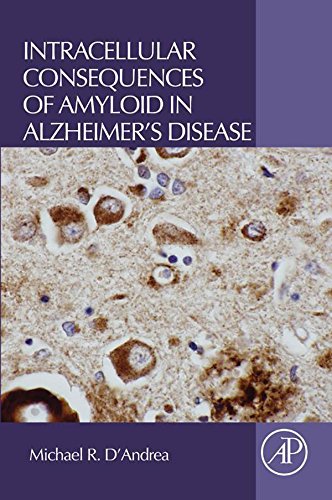
Intracellular Consequences of Amyloid in Alzheimer's Disease by Michael R. D'Andrea


Book Detail:
Category: eBooks
Binding: Kindle Edition
Author: Michael R. D'Andrea
Number of Pages:
Amazon.com Price : $59.67
Lowest Price : $59.67
Total Offers : 1
Rating: 5.0
Total Reviews: 1
Intracellular Consequences of Amyloid in Alzheimer's Disease is the best ebook you need. You can download any ebooks you wanted like Intracellular Consequences of Amyloid in Alzheimer's Disease in easy step and you can save it now. Best ebook you should read is Intracellular Consequences of Amyloid in Alzheimer's Disease. I am sure you will love the Intracellular Consequences of Amyloid in Alzheimer's Disease. You can download it to your computer in simple steps.
Results for Intracellular Consequences of Amyloid in Alzheimer's Disease by Michael R. D'Andrea
Amyloid Precursor Protein Processing and Alzheimer’s Disease ~ Alzheimer’s disease AD the leading cause of dementia worldwide is characterized by the accumulation of the βamyloid peptide Aβ within the brain along with hyperphosphorylated and cleaved forms of the microtubuleassociated protein tau
Alzheimer’s Disease and the βAmyloid Peptide ~ Alzheimer’s disease AD pathogenesis is widely believed to be driven by the production and deposition of the βamyloid peptide Aβ For many years investigators have been puzzled by the weak to nonexistent correlation between the amount of neuritic plaque pathology in the human brain and the degree of clinical dementia
ALZHEIMERS DISEASE Neuropathology ~ ALZHEIMERS DISEASE Alzheimers Disease AD is a specific neurodegenerative disease and is the most common cause of dementia in old people Clinically it is characterized by loss of memory inability to learn new things loss of language function a deranged perception of space inability to do calculations indifference depression delusions and other manifestations
Amyloid beta Wikipedia ~ Amyloid beta Aβ or Abeta denotes peptides of 36–43 amino acids that are crucially involved in Alzheimers disease as the main component of the amyloid plaques found in the brains of people with Alzheimers disease The peptides derive from the amyloid precursor protein APP which is cleaved by beta secretase and gamma secretase to yield Aβ Aβ molecules can aggregate to form flexible
Amyloid Wikipedia ~ Definition The name amyloid comes from the early mistaken identification by Rudolf Virchow of the substance as starch amylum in Latin from Greek ἄμυλον amylon based on crude iodinestaining a period the scientific community debated whether or not amyloid deposits are fatty deposits or carbohydrate deposits until it was finally found in 1859 that they are in fact
Frontiers Reconsideration of Amyloid Hypothesis and Tau ~ Department of Dementia and Higher Brain Function Tokyo Metropolitan Institute of Medical Science Tokyo Japan The socalled amyloid hypothesis that the accumulation and deposition of oligomeric or fibrillar amyloid β Aβ peptide is the primary cause of Alzheimers disease AD has been the mainstream concept underlying AD research for over 20 years
Porphyromonas gingivalis in Alzheimer’s disease brains ~ Porphyromonas gingivalis the keystone pathogen in chronic periodontitis was identified in the brain of Alzheimer’s disease patients Toxic proteases from the bacterium called gingipains were also identified in the brain of Alzheimer’s patients and levels correlated with tau and ubiquitin pathology Oral P gingivalis infection in mice resulted in brain colonization and increased
THE PATHOPHYSIOLOGY OF ALZHEIMER’S DISEASE AND DIRECTIONS ~ 256 Vol 3 No 8 October 2005 ABSTRACT The pathophysiology of Alzheimer’s disease AD is complex involving several neurotransmitter systems and pathophysiologic processes
Alzheimers Research Therapy Articles ~ PET imaging of mGluR5 in Alzheimer’s disease Metabotropic glutamate subtype 5 receptors mGluR5 modulate synaptic transmission and may constitute an important therapeutic target in Alzheimer’s disease AD by mediating the synaptotoxic action of
Alzheimer Disease Practice Essentials Background Anatomy ~ Alzheimer disease AD is an acquired disorder of cognitive and behavioral impairment that markedly interferes with social and occupational functioning It is an incurable disease with a long and progressive course
Read or Download Intracellular Consequences of Amyloid in Alzheimer's Disease Book by Michael R. D'Andrea. This awesome book ready for download, you can get this book now for FREE. All your favorite books and authors in one place! PDF, ePubs, MOBI, eMagazines, ePaper, eJournal and more.

Intracellular Consequences of Amyloid in Alzheimer's Disease by Michael R. D'Andrea accessibility Books LIbrary as well as its powerful features, including thousands and thousands of title from favorite author, along with the capability to read or download hundreds of boos on your pc or smartphone in minutes.
Comments
Post a Comment